A full electrical installation or rewire is one of the bigger jobs you'll plan for as a homeowner, but it's also one that pays back for decades. Modern wiring, RCD protection on every circuit, and a tidy consumer unit make a real difference to safety, daily reliability, and the property's resale value. This guide walks through when a full install makes sense, what to expect on the day, what it costs, and what certification you should end up with in your hands.
When You Need a Full Installation or Rewire
Not every home needs a full rewire. Plenty of properties just need a board upgrade or a localised piece of work. A full installation makes sense in a few specific cases:
- The property is being significantly extended or refurbished: If you're stripping back to bare walls anyway, the cost premium for new cable is small and you'll never have a better access window.
- The existing wiring pre-dates 1985: Older rubber-insulated or early PVC cabling becomes brittle and unsafe over time. If you can see cloth-covered cable in the loft, that's a candidate for replacement.
- The fuse board is plastic, has rewireable fuses, or no RCD: All three are signs of a wider installation that's overdue for an update, even if there's nothing visibly wrong.
- An EICR has flagged multiple C1 or C2 issues: One or two issues can usually be remediated. Multiple ones across different circuits often mean a rewire is more cost-effective than fixing each individually.
- A change of use: Letting a property as a HMO, converting an outbuilding to a granny annexe, or moving from domestic to commercial use can each push the wiring requirements upward.
What's Involved on the Day
A typical domestic rewire takes between three and six working days depending on property size and access. The sequence is broadly the same on every job:
- Pre-installation survey: We walk the property with you, agree the new socket and switch positions, talk through lighting choices, and confirm the consumer unit location. Then we quote to a fixed price so you know exactly what you're paying for.
- First fix: Floors come up where needed, walls get chased for vertical runs, and new cable goes in for every circuit (sockets, lighting, immersion, oven, shower, outdoor supply). All metal back-boxes are fitted at this stage.
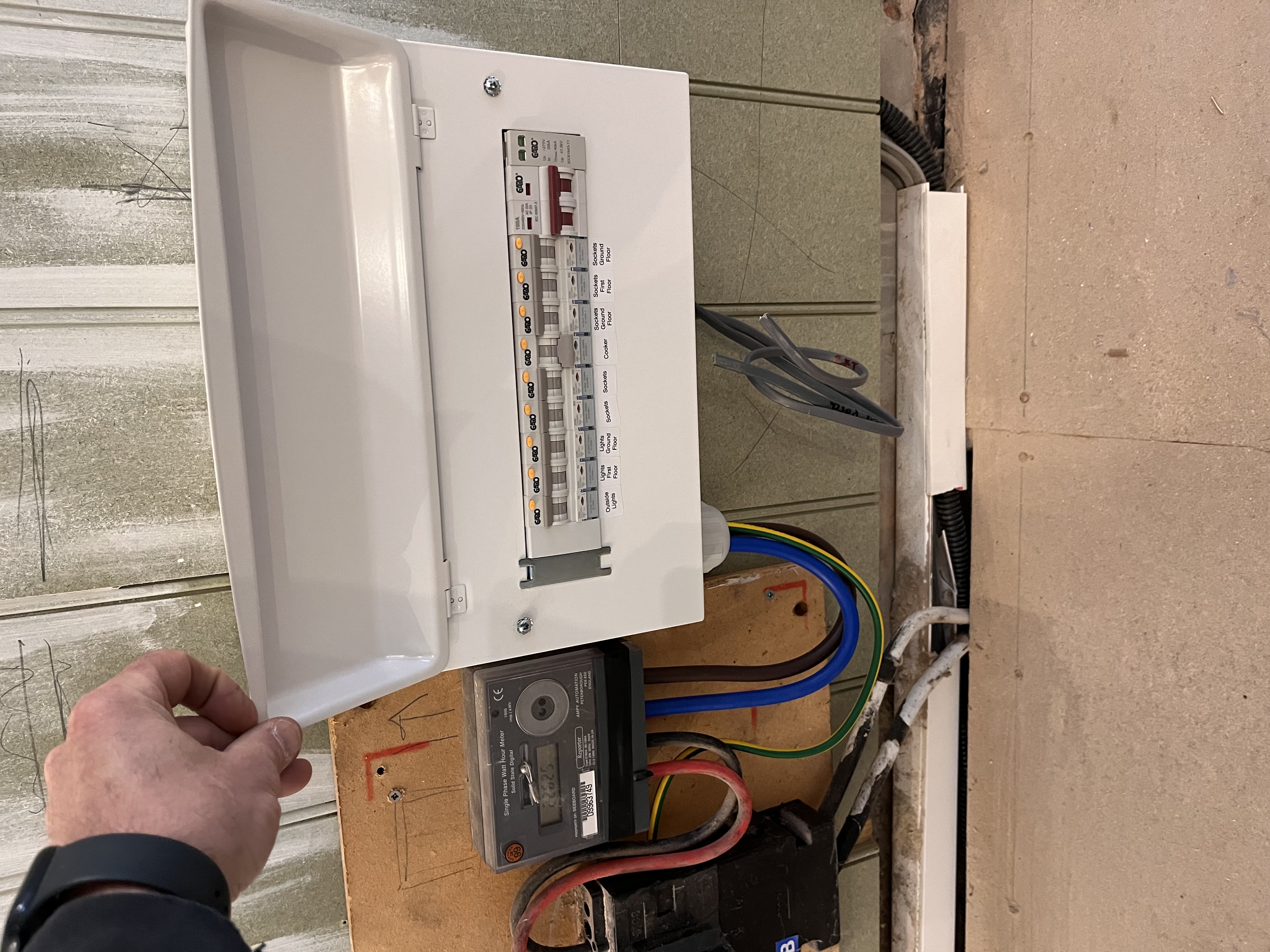
- Consumer unit replacement: The old fuse board comes out, and a metal-clad consumer unit with a dedicated RCBO on every circuit goes in. Each breaker gets labelled clearly so you know what's what.
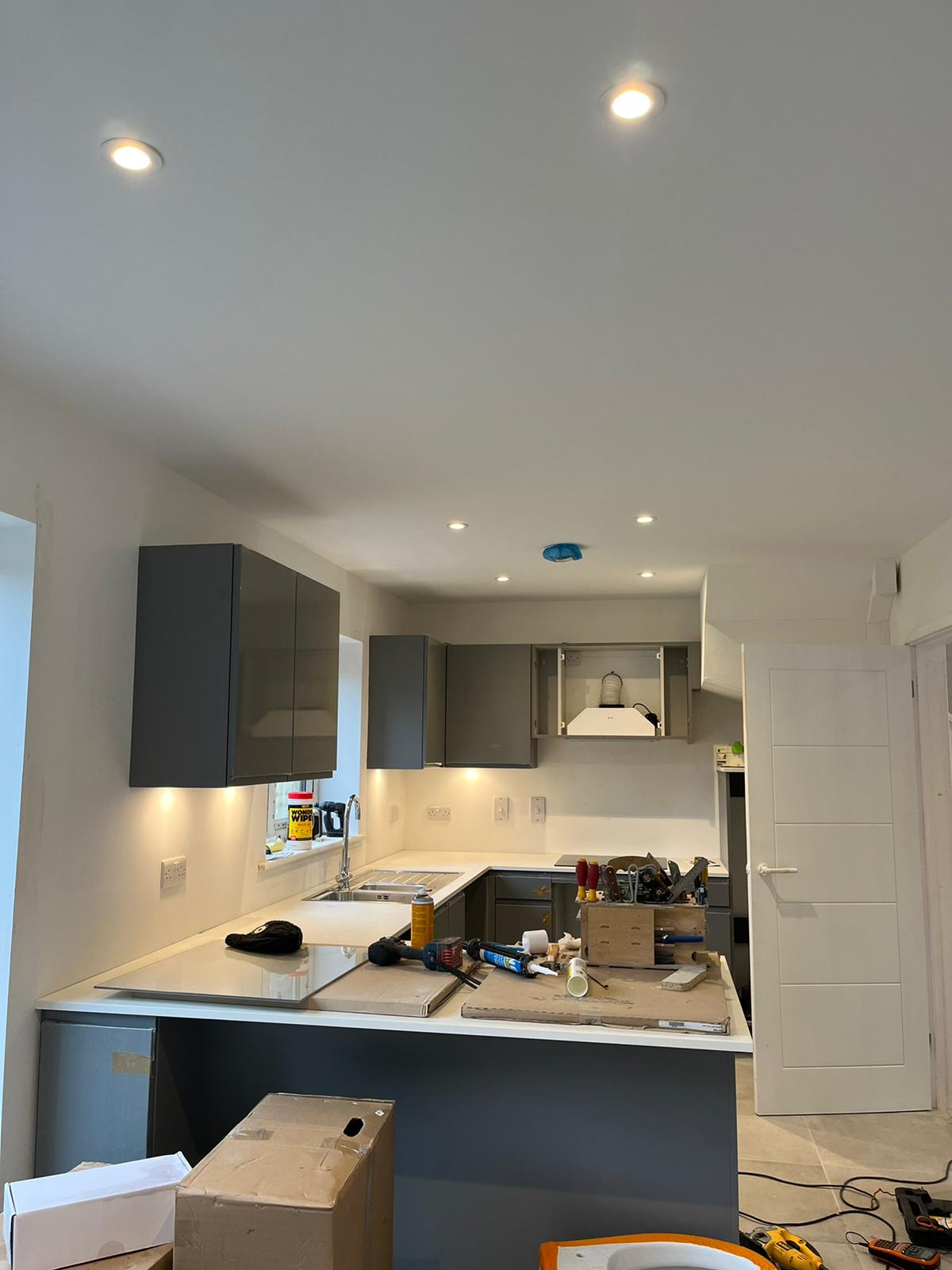
- Second fix: Sockets, switches, ceiling roses, downlights, and any extras (smoke detectors, outdoor lights, kitchen extractors) get installed and connected.
- Test and certify: Insulation resistance, continuity, polarity, earth fault loop, and RCD trip-time tests are carried out on every circuit. The results go on the Electrical Installation Certificate.
- Sign-off and walk-through: We notify the local authority under Part P, hand over the certification pack, and walk you through the new board layout.
We protect floors and surfaces, clear up at the end of each day, and aim to leave the property habitable overnight even mid-install. It's still disruptive, but a well-planned rewire is much less painful than people expect.
Planning a Full Installation?
Call JMA Electrical on 07850 965753. Free quotes across Steyning, Lancing and the wider Sussex area.
Call for a Free QuoteCost Guide
A full domestic installation typically runs between £5,500 and £7,500. The big variables are property size, the level of finish you want (recessed downlights cost more than batten holders), and whether the supply itself needs upgrading at the meter.
- 2-bed flat or small terrace: Around £4,500-£6,000. Fewer circuits, simpler cable runs.
- 3-bed semi or terrace: Around £5,500-£7,500. The mainstream case for most homeowners.
- 4-bed detached or larger: £7,000-£10,000+. More circuits, longer cable runs, more rooms to second-fix.
- Add-ons that move the price: Outdoor sockets and lighting, EV charger supply, recessed downlights with dimming, smart switches, electric showers, kitchen circuits with high-load appliances.
Always ask for a written, fixed-price quote that breaks down materials, labour, and certification. If a quote is significantly lower than the rest, check whether it includes the consumer unit, the certification, and the Part P notification. Skipping any of those is a false saving.
Certification and Sign-off
At the end of every installation you should walk away with three things: an Electrical Installation Certificate (EIC), the Building Regulations Part P compliance certificate, and a circuit chart for the front of the new consumer unit. Keep the paperwork somewhere you can find it. You'll need it for any future EICR, for buyer's solicitors during a sale, and to validate the warranty on the work.
At JMA we self-certify the work under Part P as an NICEIC Domestic Installer, and we notify the local authority on your behalf. The Building Regs paperwork follows in the post a couple of weeks later, but the EIC is in your hand on the day we sign off.
Why Use a NICEIC Installer
Electrical installation is notifiable work under Part P of the Building Regulations. There are a few ways to get it certified, but using an NICEIC-registered Domestic Installer is the most direct.
- Self-certification under Part P: NICEIC installers are authorised to notify Building Control directly. You don't pay extra for a separate inspector or wait for a Building Control visit.
- Six-year NICEIC-backed guarantee: Work signed off by an NICEIC installer carries the NICEIC's warranty scheme. If the installer ceases trading and a defect arises within six years, the NICEIC will arrange remedial work.
- Insurance and mortgages: Lenders and home insurers prefer (and sometimes require) certification by a recognised competent person scheme. NICEIC is the most common and most widely accepted in the UK.
- Resale value: Buyers' solicitors routinely ask for the EIC and Part P paperwork. Non-certified work can hold up a sale or knock pounds off the asking price.
- Annual assessment: NICEIC installers are reassessed every year. The badge isn't a one-time qualification; it's an ongoing standard.
You can verify any contractor on the NICEIC's online register at niceic.com.
Frequently Asked Questions
Most domestic rewires take three to six working days, depending on property size and how easy the cable runs are. We aim to leave the property tidy and habitable at the end of each day, and we'll talk through the timeline before we start so you can plan around it.
Most homeowners don't move out for a domestic rewire. The work is dusty and the supply will be off for portions of the day, but in a 3- or 4-bed home we can usually keep at least one room reasonably accessible. For longer rewires or smaller flats, some clients prefer to stay elsewhere for a few nights.
Yes. A full rewire is notifiable work under Part P. As an NICEIC-registered installer, we self-certify and notify the local authority on your behalf, and you'll receive the Building Regs compliance paperwork in the post within a few weeks.
Yes, where we've chased walls for vertical cable runs. We make the chases as small as possible and fill them, but the patches will need to be re-plastered or skimmed and decorated for a final finish. We can recommend a plasterer if you don't already have one.
Often, yes. If you're rewiring anyway, it's a sensible time to plan ahead for a 7kW EV charger circuit, a battery storage tie-in, or a future solar PV connection. We can leave a "future-proof" supply terminated in the consumer unit so adding the kit later is straightforward.
Every full installation we sign off carries a six-year NICEIC-backed workmanship guarantee. Materials are also covered by the manufacturer's warranty where applicable. If anything ever needs a second look, we're a phone call away.